
What is the Best Pixel for my LED Display?
When it comes to choosing the right pixel protocol for LED pixel lighting displays, the sheer volume in the variety can be more confusing than helpful.

Not all LED fixtures are created equal, so your best option towards finding the perfect solution for your LED pixel lighting needs will be dependent on your particular use case.
While a wide variety of pixel types exist, Advatek supports 90+ IC chips and our team are continually adding protocols all the time. See our list of . This article will be focusing particularly on three very distinct protocols, which are listed below:
Advatek Lighting supports most addressable LED lighting types. For personalized advice on which option is best for your lighting project, today.
WS2812B

WS2812B pixel protocol
This integrated light source usually comes in a variety of colors alongside a driver that is concealed inside a 5050 sized (5mm x 5mm) RGB LED package. This pixel type is Data-Only and is popular for its simple design. It boasts an impressively small form-factor and so is easily mountable on a flexible PCB strip.
The WS2812B operates on a 400Hz . Although this rate provides persistence of vision for the human eye, it will not translate well to cameras. When shooting with a 24fps camera, the minimum PWM rate of the pixels you’re filming should be about 720Hz, so this pixel type will not be adequate for cameras.
WS2812B Refresh Rates
Refresh rates depend on several factors in your pixel control system. One of these factors is whether the pixels are data-only or clocked. Clocked pixel types can allow for faster and adjustable data transmission, which may affect your overall refresh rate. As the WS2812B pixel type is data-only, its data speeds and the overall refresh rate will not benefit from a clocked data transmission. Whether or not this is a concern for you depends on your specific use case. If you’re creating a lighting display of fast and dynamic lights, and you need a large number of pixels connected in series, then this pixel type may result in a low overall refresh rate. For more information, see the article: .
Despite this, the WS2812B is one of the most popular LED drivers, particularly for systems with a low pixel count, due to its simplicity and multitude of applications. It is widely manufactured and readily available. If you’re after a simple solution on a budget, this is the system for you.
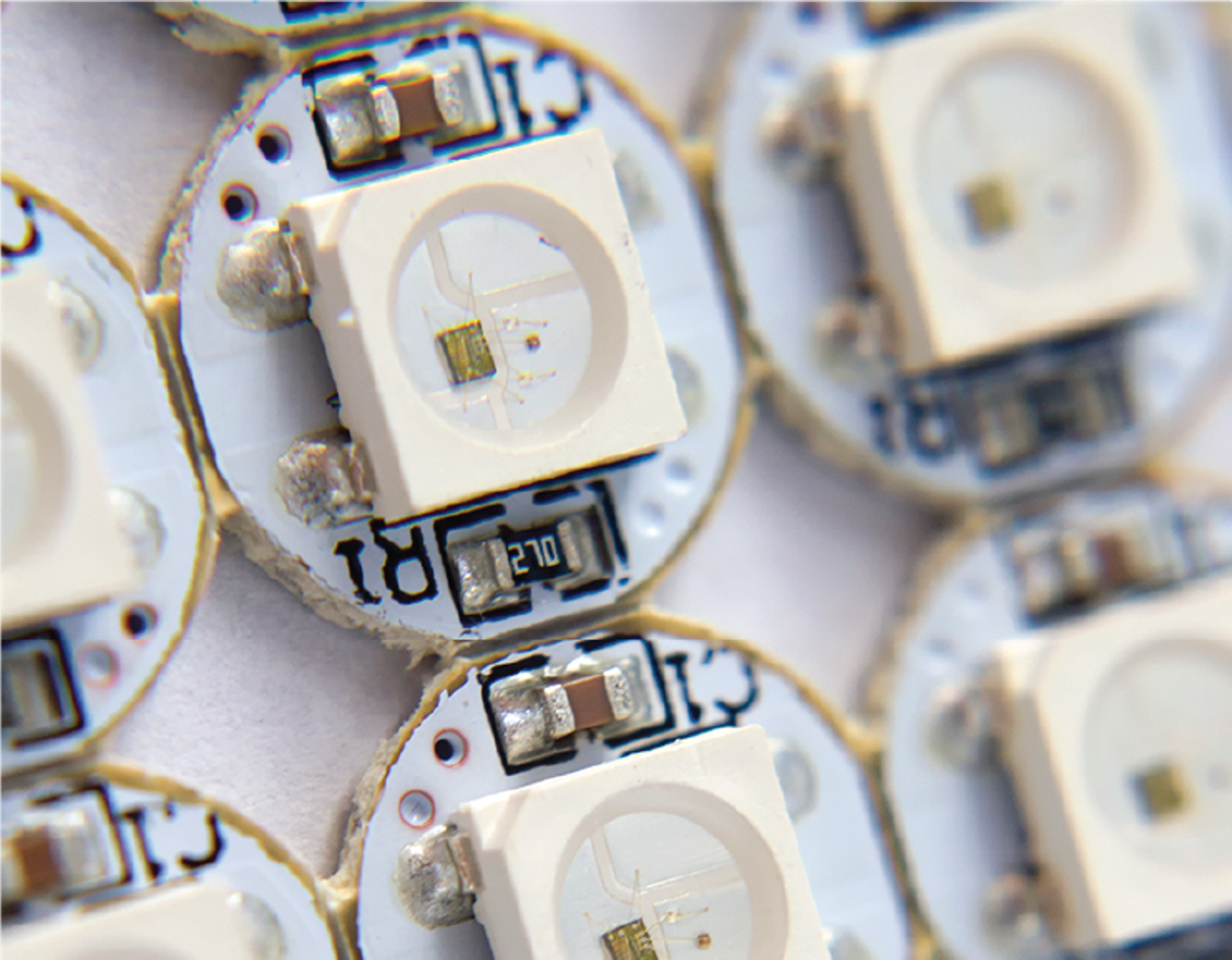
WS2812 pixel protocol
SK6813

SK6813 pixel protocol
This protocol offers more features and a higher quality pixel than the previously mentioned WS2812B. The form factor is an identical size, making it a good pixel type for PCB strip, however it uses six pins per chip, rather than four. One pin is to allow for redundancy in the data line, and another is to allow for a higher voltage to drive the LEDs.
Advatek offers two different densities of these SK6813 pixels in the Blaze series of LED Fixtures.
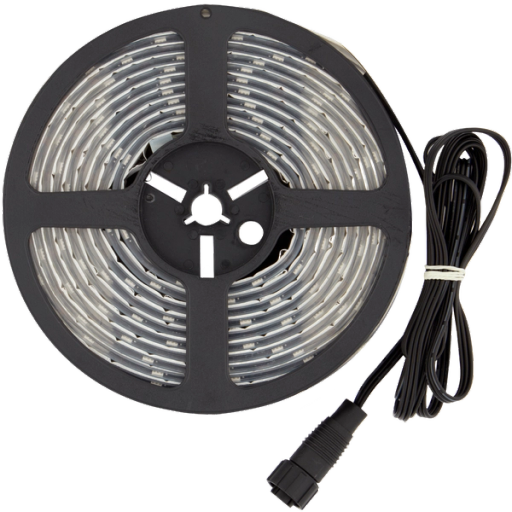
There are two versions of this protocol. We will be exploring the 12V version: “SK6813-HV”.
Data Redundancy
The first main feature of this pixel type is the backup data line. Although only one data line is used to connect the LED strip to the PixLite controller, the first pixel creates an identical second data line as a backup. This means that if a pixel fails, or if there is a break in the data line at any point beyond the first pixel, the backup data line will be used to receive the same data. If a second pixel fails, the backup data line still provides that redundancy. In fact, the entire strip should never fail from a break in the data unless two adjacent pixels fail.
SK6813 Up Close
Secondly, SK6813 runs off 12V instead of 5V, regulating the voltage down internally. While this does mean that each LED runs at a slightly higher temperature, it becomes easier to drive longer chains of pixels without the need for power injection.
Lastly, SK6813 offers a higher PWM rate than WS2812B, increasing it from 400Hz to 1200Hz. This makes it suitable for filming with a 40fps or lower camera. The refresh rate of this pixel is still quite low compared to clocked pixel chips so it may not be suitable for all applications.
If you need data redundancy and standard film quality in your lighting system, then SK6813 is for you.
MY9231

MY9231 pixel protocol
This high-end pixel type boasts an impressive 16-bit color resolution at a fast PWM rate. This chip is clocked, and so requires an extra line to be connected to the pixel output. It is a larger physical chip, and so is usually installed within molded casings along a string of LEDs.
MY9231 Up Close
The addition of a clock line can improve data speeds from the pixel controller to the LEDs. If your pixel system is not limited by other factors, the addition of a clock can improve your . In addition, the clock frequency can be modified during configuration, allowing for more flexibility. As a general rule, increasing the clock speed will give you a higher refresh rate (ideal for faster and more dynamic lighting systems), and decreasing the clock speed will allow for a slightly longer distance of cable between the controller and the first pixel. For more information, see the article: .
This chip drives the brightness of its LEDs with 16-bit data, allowing for more precise color mixing and accurate brightness levels when a gamma corrected curve is employed. PixLite controllers operate MY9231 chips in 16-bit mode to achieve this feature, and an adjustable gamma value slider is provided for each color to achieve optimal results. At 16-bit resolution, MY9231’s PWM rate is 2kHz, ideal for cameras operating below 66fps. This makes this pixel type perfect for capturing events with high quality cameras.
MY9231 is the pixel of choice if you’re in need of high color resolution and high refresh rates.
Get in touch with the team at Advatek Lighting
If you’re still unsure about the best addressable LED lighting solution for your next project, with the team at Advatek Lighting. Not only are we keen to find out more about your lighting needs, but we’ll help you select the right pixel controller for your design.